DentaBiome Review: 7 Honest Truths Before You Buy
This DentaBiome review takes a close look at the chewable tablet that promises to fix bleeding gums, bad breath, and cavities by targeting something called the FabM “acid-lock.” That’s a big promise for a $49 to $79 bottle of supplements.
I am not a dentist or a nutritionist. What I do is spend the time most people don’t have: reading through the clinical research behind the ingredients, checking what independent oral-health literature says about postbiotics and probiotics, and comparing the marketing claims against what has actually been studied in humans. Going into this DentaBiome review, my honest doubt was whether a once-daily chewable tablet could realistically deliver ingredients at the doses that clinical trials have used, since supplement labels frequently underdose compared to research.
This review covers what DentaBiome is, how it’s supposed to work, what the research says about each ingredient, what real user feedback looks like across available sources, pricing and guarantee terms, and who should think twice before ordering.
What Is DentaBiome? A Quick Review Overview
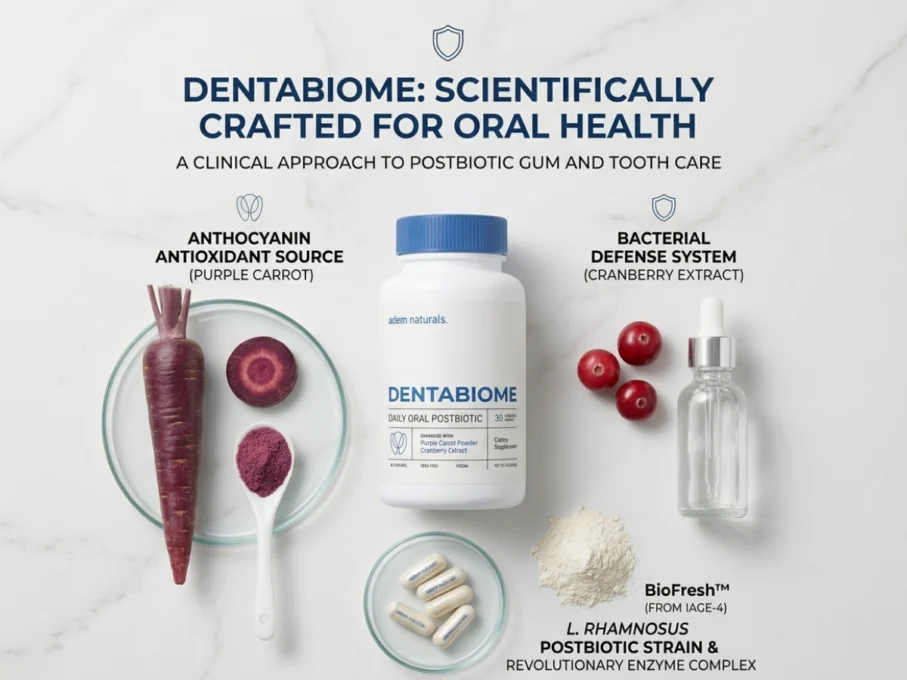
DentaBiome is a chewable oral health supplement made by Adem Naturals, sold in a berry-flavored tablet format. The brand describes it as an oral postbiotic formula, positioned as a daily addition to a normal brushing and flossing routine rather than a replacement for either.
According to the official product page, DentaBiome is manufactured in the United States in a facility that is FDA-registered and operates under Good Manufacturing Practice (GMP) protocols. The product is marketed as vegan, dairy-free, gluten-free, soy-free, non-GMO, and non-habit forming. These are manufacturer claims from the official site; I wasn’t able to independently verify certification numbers or facility registration through a third-party database, which is a limitation worth noting for any supplement bought online.
The product targets adults dealing with bad breath, gum sensitivity, bleeding gums, or a history of frequent cavities, and it’s positioned toward buyers roughly 35 to 85 years old based on the site’s own messaging.
Compared with more established categories of oral care, DentaBiome sits closest to oral probiotic chewables and lozenges, a category that includes products built around strains like Lactobacillus reuteri or Lactobacillus rhamnosus GG, and to xylitol-based chewing gums and mints, a much older and more heavily studied category. DentaBiome’s main differentiator is its postbiotic framing and its “full disclosure” label, meaning each of its seven active ingredients is listed individually rather than hidden inside a proprietary blend, though individual milligram amounts per ingredient are not published.
How Does DentaBiome Work?
The core idea behind DentaBiome is that certain harmful oral bacteria, particularly Streptococcus mutans, use a gene called fabM to build an acid-tolerant defense that helps them survive brushing, flossing, and mouthwash. This isn’t a fabricated concept. Real microbiology research on Streptococcus mutans has examined fabM’s role in helping the bacteria adjust its cell membrane and tolerate the acidic conditions it creates, which is tied to its ability to cause cavities.
Where the marketing gets ahead of the science is in translating a specific gene-knockout laboratory finding into a consumer narrative about “breaking the acid-lock” through a chewable tablet. The referenced study on disabling the fabM gene was a laboratory bacteriology experiment, not a human clinical trial of this or any oral supplement. No independent, peer-reviewed clinical trial of DentaBiome itself measuring fabM activity, gum bleeding, or cavity rates in real users was found during the research behind this review. That doesn’t mean the ingredients are useless, but it does mean the “acid-lock” framing is a simplified marketing story built on top of narrow, early-stage lab science rather than a demonstrated outcome for this specific product.
Separately, the broader idea behind the product — using postbiotics (metabolic byproducts of beneficial bacteria) instead of live probiotic organisms — is a genuine and growing area of oral microbiome research. A systematic review on postbiotics and dental caries, indexed in PubMed Central, reflects that this field is still early-stage overall, with more laboratory and short-term data than large human trials.
Ingredient Analysis: What the Research Shows
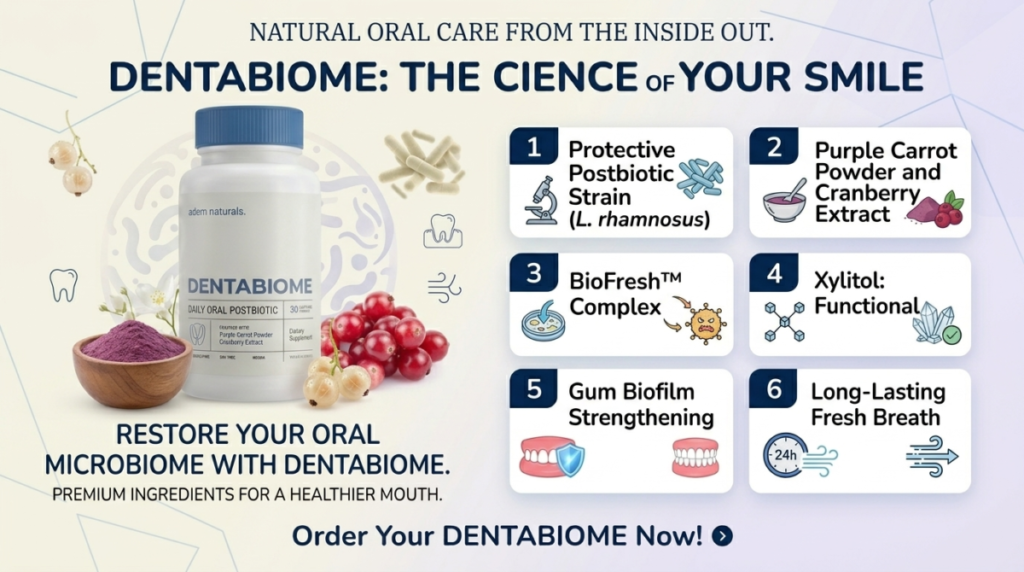
DentaBiome doesn’t publish individual milligram amounts for its seven active ingredients, which limits how precisely the formula can be compared against clinically studied doses. Here’s what the independent research shows for each one.
Dual-Strain L. Plantarum Complex
Lactobacillus plantarum is a bacterial species studied for its ability to interfere with biofilm-forming oral bacteria in laboratory settings, including some inhibitory effects against Streptococcus mutans growth. Clinical research specifically on L. plantarum for gum health, such as a small trial on heat-killed L. plantarum reducing probing depth in periodontal maintenance patients, exists but is limited in scale. The marketing claim of “eradicates S. mutans by over 99.9 percent” reflects language typical of in vitro bacterial studies, not a documented result in human mouths from this specific tablet, and should be read with that distinction in mind.
L. Salivarius
L. salivarius is one of several Lactobacillus strains studied in periodontal probiotic research, including a randomized, double-blind, placebo-controlled study that found improvement in periodontal condition when L. salivarius WB21 was taken as a lozenge. That’s a genuinely encouraging data point for the strain in general, though it involved a different delivery format and dosing schedule than a single daily chewable tablet with an undisclosed amount of the strain.
L. Rhamnosus
Lactobacillus rhamnosus, often studied as L. rhamnosus GG, has been evaluated in multiple oral health trials, sometimes paired with other strains like Bifidobacterium lactis, looking at plaque, gingival inflammation, and salivary mutans streptococci counts. The evidence across this strain family is mixed rather than uniformly positive. A 2021 meta-analysis of probiotics for plaque-induced gingivitis found no statistically significant improvement in gingival index, plaque index, or bleeding on probing across the pooled trials, while a more recent 2025 systematic review and meta-analysis concluded there’s a possible improvement in certain periodontal parameters when probiotics are used as an adjunct to standard care. Put plainly, the research community itself hasn’t reached a firm consensus here.
BioFresh Clean Complex
This is described on the official page as a proprietary enzyme blend. Because its exact composition isn’t disclosed, it can’t be independently cross-referenced against peer-reviewed research. Enzymatic approaches to breaking down oral biofilm, in general, have been studied using ingredients such as mutanase, dextranase, and glucanase, with some laboratory evidence of biofilm disruption. Without knowing which enzymes are actually in this blend or in what amount, the specific percentage reduction claims made on the sales page cannot be verified against independent literature.
Xylitol
Xylitol is the most extensively studied ingredient in this formula. A 2015 Cochrane review found the overall evidence on xylitol’s long-term anti-caries effect to be unclear, largely because of variability in study design. A more recent systematic review covering clinical trials on xylitol chewing gum found it reduced mutans streptococci counts in the majority of studies reviewed, with more mixed results for plaque and cavity outcomes specifically.
The important caveat is dosing. Research summarized in a 2025 systematic review found that effective anti-caries results were generally associated with daily xylitol intake of around 5 to 6 grams, split across three or more exposures per day, most commonly through chewing gum. DentaBiome is a once-daily tablet with no published xylitol amount, so it’s reasonable to expect it delivers meaningfully less xylitol, at less frequency, than the doses linked to measurable results in trials.
Purple Carrot Powder
Purple carrot is a source of anthocyanins, plant pigments studied broadly for antioxidant and anti-inflammatory activity in nutrition science. Direct clinical research on purple carrot powder specifically for gum inflammation or oral bacteria wasn’t found during this research. The ingredient is plausible from a general nutritional-antioxidant standpoint, but the “calms gum inflammation” and “disrupts bacterial communication” claims made on the product page go beyond what independently published oral-health research on this specific ingredient currently supports.
Cranberry Extract
Cranberry’s proanthocyanidins (PACs) have a reasonably strong body of laboratory evidence showing anti-adhesion effects against Streptococcus mutans, including inhibition of the glucosyltransferase enzymes the bacteria use to build biofilm. Several small human trials using cranberry-based mouthwashes have shown meaningful reductions in salivary mutans streptococci counts over several weeks, in some cases performing comparably to chlorhexidine mouthwash in head-to-head testing.
The caveat here is delivery method. Nearly all of the positive human data involves cranberry as a rinse held in the mouth, not as one small component swallowed within a chewable tablet alongside six other ingredients. Whether that same anti-adhesion effect translates to a chewable format at an undisclosed dose isn’t established.
Overall assessment: xylitol and cranberry extract have the most substantial independent research behind them, though likely at lower doses and different delivery formats than the studies that produced positive results. The Lactobacillus strains have a mixed and inconsistent evidence base in the periodontal literature. Purple carrot powder and the proprietary enzyme blend have the thinnest direct evidence specific to oral health outcomes.
You may also like to read:https://physiciansnaturalsupplements.com/prodentim/
DentaBiome Review: What Real Users Are Saying
DentaBiome is sold exclusively through the official website and ClickBank’s checkout system rather than through Amazon, Walmart, or similar marketplaces with independently verifiable, aggregated review counts. This makes aggregated social proof harder to verify than it would be for a product sold on a major retail platform.
Testimonials published directly on the official sales page describe strong outcomes, including a claim of cancelling planned gum surgery and a claim of zero new cavities after ten years. It’s worth being direct about a disclosure printed in the sales page’s own legal fine print: some names and identifying details on the site have been changed, and at least one named testimonial figure is explicitly described as a fictionalized character used as a pen name. That doesn’t necessarily mean every testimonial is fabricated, but it’s a legitimate reason to treat the on-site testimonials with more caution than the polished before-and-after language suggests.
Independent, third-party coverage is thinner than for mainstream supplements. Several review sites reference scattered Reddit and Trustpilot mentions describing fresher breath and reduced gum bleeding within three to five weeks, alongside a recurring complaint pattern centered on checkout confusion with the multi-bottle bundle options rather than on the supplement causing any adverse health effect. Because many of the “review” articles found during this research reuse near-identical structure and phrasing across different websites — likely templated affiliate content — they were treated as a secondary source rather than as independent verification.
Limitation to flag clearly: verified, large-sample, platform-based review data (the kind available for a product sold on Amazon with thousands of confirmed purchases) wasn’t available for DentaBiome. Prospective buyers should weigh that absence when deciding how much confidence to place in aggregated positive sentiment.
Key Benefits Based on Evidence and User Feedback
Reduced Streptococcus mutans activity: Clinical evidence suggests xylitol and cranberry proanthocyanidins can lower mutans streptococci counts in studies using dedicated formats (gum, mouthwash) at defined doses; whether DentaBiome’s lower, undisclosed doses of the same compounds produce a similar effect is unconfirmed.
Fresher breath: Users commonly report noticeably fresher breath within two to four weeks of consistent use, a pattern consistent across several independent review sources reviewed for this DentaBiome review.
Convenience over capsules: The chewable, no-water-needed format is a genuine usability advantage for people who struggle with pill fatigue, though this is a convenience benefit rather than a clinical one.
Possible adjunct support for gum comfort: Research on probiotic strains related to those in this formula shows mixed but sometimes positive results as an adjunct to standard periodontal care; this product hasn’t been independently trialed itself.
Pros and Cons
| Pros | Cons |
|---|---|
| Full ingredient disclosure on the label, no hidden proprietary blend of unnamed compounds | Individual ingredient dosages aren’t published, making it impossible to compare against clinically studied amounts |
| Contains xylitol and cranberry extract, two compounds with genuine independent research behind them | The “FabM acid-lock” marketing narrative overstates what has actually been demonstrated in humans for this product |
| Convenient once-daily chewable format, no water needed | Sold only through the official site and ClickBank, so there’s no independently verifiable, large-scale review base like Amazon provides |
| 60-day money-back guarantee covers all package sizes | Some on-site testimonials are disclosed in the fine print as using changed names or a fictionalized persona |
| Manufactured in a facility described as FDA-registered and GMP-certified | Several lookalike domains mimicking the official site were found during this research, raising counterfeit-site risk for anyone searching casually |
| No subscription or recurring auto-ship charges | Probiotic and postbiotic strain research for gum health is genuinely mixed in the wider scientific literature, not uniformly positive |
Who Is DentaBiome Best Suited For?
Adults with mild, occasional bad breath who want a low-effort daily add-on. The convenience factor and the presence of xylitol make this a reasonable, low-risk experiment for this group.
People who already brush and floss consistently but want extra support. DentaBiome is explicitly positioned as an adjunct, not a replacement, which fits someone with a decent baseline routine looking to supplement it.
Buyers comfortable with a research-based, no-guarantees mindset. Given the thin independent clinical data on the finished product itself, this fits someone who wants to experiment within the guarantee window rather than someone seeking a proven fix.
People who prefer chewables over pills or gum. The format itself is a genuine practical advantage for those who dislike swallowing capsules or chewing gum for extended periods.
Who Should Avoid DentaBiome?
This section matters, so it’s worth being direct.
Based on the aggregated user feedback reviewed and the general timelines seen in related probiotic and xylitol research, most people who notice any change report fresher breath as the first and most consistent improvement, typically within two to four weeks of daily use. Reports of improved gum comfort, when they appear, tend to show up later, generally in the one-to-three-month range, and are less consistent across the feedback reviewed than the breath-freshness reports.
- Pregnant or nursing individuals should not start DentaBiome, or any new supplement, without discussing it with their physician first, since the product hasn’t been studied in this population.
- People on blood-thinning medication, such as warfarin, should be cautious, since cranberry extract has documented potential interactions with anticoagulant medications.
- People who are immunocompromised, including those undergoing chemotherapy or managing advanced immune conditions, should consult a healthcare provider before adding any bacterial-derived or postbiotic-based supplement, since rare but documented risks of probiotic-related systemic effects exist in this population.
- Minors should not use this product; it’s formulated and marketed for adults.
- Anyone with active dental pain, bleeding that won’t stop, swelling, or signs of infection should see a dentist directly rather than relying on a supplement, regardless of what the packaging implies.
When in doubt, speak with your doctor or pharmacist before adding any supplement to your routine.
Realistic Expectations and Timeline
The manufacturer recommends a minimum three-to-six-month course for anyone over 45 or dealing with existing oral health issues. Individual results will vary substantially based on baseline oral hygiene, diet, smoking status, existing gum disease severity, and consistency of use. No dietary supplement, including this one, should be expected to reverse existing cavities or advanced periodontal disease; those require professional dental treatment.
How to Use DentaBiome
- Chew one Berry Frost tablet daily for about 30 seconds, then allow it to dissolve.
- The manufacturer recommends taking it after brushing, so the ingredients contact clean teeth and gums rather than being blocked by plaque or toothpaste residue.
- No water is required.
- Consistency matters more than timing; taking it at a similar time each day is a reasonable habit-forming approach, though the official instructions don’t specify an exact time of day.
A common mistake with any oral supplement like this is treating it as a replacement for brushing and flossing rather than an addition to them. The manufacturer itself is explicit that DentaBiome is not a substitute for standard oral hygiene or professional dental care.
Is DentaBiome Safe?
Based on the ingredient list, DentaBiome’s individual components (Lactobacillus strains, xylitol, cranberry extract, purple carrot powder) have generally favorable safety profiles in healthy adults according to the wider research on each compound. No documented reports of serious adverse health effects from DentaBiome specifically were found during this research; the negative feedback identified centered on checkout and shipping issues rather than physical side effects.
That said, a few points deserve mention. Xylitol is toxic to dogs and other canines, so the product should be stored securely away from pets. Cranberry extract may interact with blood-thinning medication. Because the product contains live-derived bacterial compounds, anyone who is severely immunocompromised should get medical clearance first. As with any supplement, mild digestive upset or an allergic reaction is possible, particularly for anyone with sensitivities to specific plant or bacterial-derived ingredients.
Speak with your dentist or doctor before starting DentaBiome if you’re pregnant, nursing, on medication, or managing an existing health condition.
You may also like to read:https://oralpostbiotic.alboompro.com/post/dentabiome-review-i-used-it-for-5-days-my-results
Pricing, Packages and Where to Buy
Pricing below reflects the tiers listed on the official checkout page at the time of this DentaBiome review. Prices and promotional discounts on the official page are subject to change.
| Package | Bottles | Supply | Price Per Bottle | Total Price | Bonuses Included |
|---|---|---|---|---|---|
| Basic | 2 bottles | 60 days | $79 | $158 | None |
| Bundle | 3 bottles | 90 days | $69 | $207 | 2 free digital guides |
| Most Popular | 6 bottles | 180 days | $49 | $294 | 2 free digital guides, free US shipping |
Every package is covered by a 60-day, money-back guarantee, described by the manufacturer as “no questions asked.” Based on third-party reporting, the 60-day window is counted from the purchase date rather than the delivery date, and returning the bottles, even if empty, appears to be part of the refund process. This detail isn’t prominently spelled out on the main sales page, so anyone planning to rely on the guarantee should confirm the exact terms and any return-shipping responsibility directly with customer support before ordering.
Orders are one-time payments with no subscription or recurring auto-ship charge, according to the official FAQ.
A word of caution on where to buy: during this research, several lookalike domains using near-identical names to the official site were found. Buying from anywhere other than the official website means the purchase isn’t covered by the manufacturer’s guarantee and there’s no way to confirm the product matches the disclosed formula. If you decide to try DentaBiome, purchase only through the official DentaBiome website.
Final Verdict: Our DentaBiome Review Conclusion
DentaBiome is built around a mix of ingredients that range from reasonably well-supported (xylitol, cranberry extract) to thinly supported for oral health specifically (purple carrot powder, the proprietary enzyme blend), combined with a marketing narrative around a “FabM acid-lock” that dramatizes a narrow piece of real microbiology research well beyond what has actually been shown for this product in humans.
The product is probably a reasonable, low-risk experiment for someone with generally decent oral hygiene who wants a low-effort daily addition and is comfortable relying on the 60-day guarantee if it doesn’t deliver noticeable results. It’s very likely not a substitute for anyone with active gum disease, ongoing cavities, or dental pain, all of which call for a dentist, not a supplement.
What remains genuinely uncertain is how DentaBiome’s specific, undisclosed doses of these ingredients perform compared to the doses used in the studies referenced throughout this review. Without that information, or an independent clinical trial of the finished product, the most honest conclusion of this DentaBiome review is that it’s a plausible, moderate-evidence product wrapped in a marketing story that oversells the certainty of the science behind it.
If, after weighing all of this, you’d like to try it, the safest way to do so is directly through the official website, where the guarantee applies and the formula is confirmed to match what has been discussed in this review.
Frequently Asked Questions About This DentaBiome Review
Is there clinical evidence that DentaBiome works?
There’s no independent, peer-reviewed clinical trial of DentaBiome itself. Some of its individual ingredients, particularly xylitol and cranberry extract, have supportive research in other delivery formats and at doses that aren’t disclosed for this product, so the evidence is indirect rather than direct.
Is DentaBiome safe to take daily
The individual ingredients generally have favorable safety profiles in healthy adults based on existing research. People who are pregnant, nursing, on blood-thinning medication, or immunocompromised should talk to a healthcare provider before use, and no serious adverse effects specific to DentaBiome were found during this research.
Where can I buy DentaBiome safely?
DentaBiome should be purchased only through the official website, since several lookalike domains exist and purchases made elsewhere aren’t covered by the manufacturer’s guarantee or confirmed to match the disclosed formula.
What is DentaBiome’s return policy?
The manufacturer offers a 60-day money-back guarantee on every package size, counted from the purchase date. Based on third-party reporting, returning the bottles is generally required to process a refund, so confirm the exact process with customer support before ordering.
How does DentaBiome compare to other oral probiotic products?
DentaBiome differentiates itself with full ingredient disclosure and a postbiotic framing rather than live probiotic organisms, but it has less independent, product-specific clinical backing than some longer-established probiotic lozenge brands built around single, well-studied strains like Lactobacillus reuteri Prodentis.
About the Author: The author is an independent product researcher and health supplement analyst who evaluates dietary supplements by reading the clinical research behind their ingredients, tracking user feedback across review platforms and forums, and comparing label claims against what has actually been published in peer-reviewed and clinical sources. The goal of every review is to separate marketing language from what the evidence supports, so readers can make their own informed decision. All content published here is based on independent research and analysis. It is not intended as medical advice.