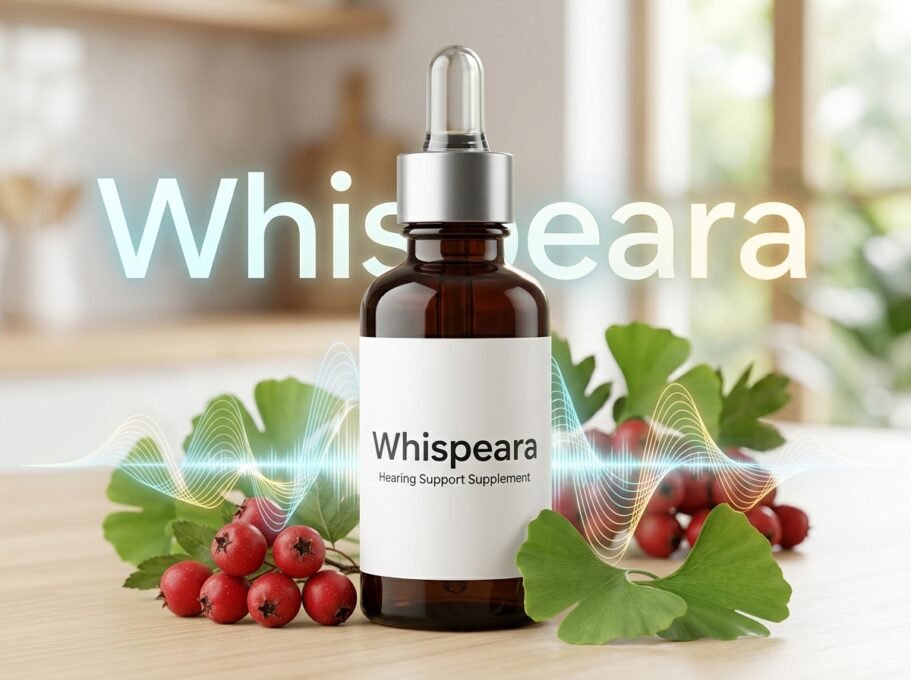
Whispeara Review 2026: Honest Analysis of Ingredients & Evidence
Persistent ringing, buzzing, muffled hearing, or difficulty following conversations can be frustrating, particularly when the problem interferes with sleep, concentration, or everyday communication. That helps explain why hearing-support supplements such as Whispeara have attracted attention from people looking for non-prescription options.
Whispeara is marketed as a dietary supplement intended to support hearing, the auditory system, brain function, and overall cognitive wellness. However, the more important question is not simply whether the product sounds promising. It is whether the ingredients, dosages, safety information, and evidence behind those ingredients justify the claims being made.
I approached this Whispeara review as an independent product researcher rather than as someone claiming personal use of the product. I reviewed the publicly available product information, compared different ingredient and pricing claims, and checked available scientific literature on several ingredients associated with the formula.
One issue stood out immediately: publicly available Whispeara pages do not consistently present the same ingredient information. The official product URL supplied for verification in the source material also does not clearly correspond to Whispeara, so some product-specific details cannot be independently confirmed.
That limitation matters. Here is what I found.
What Is Whispeara?
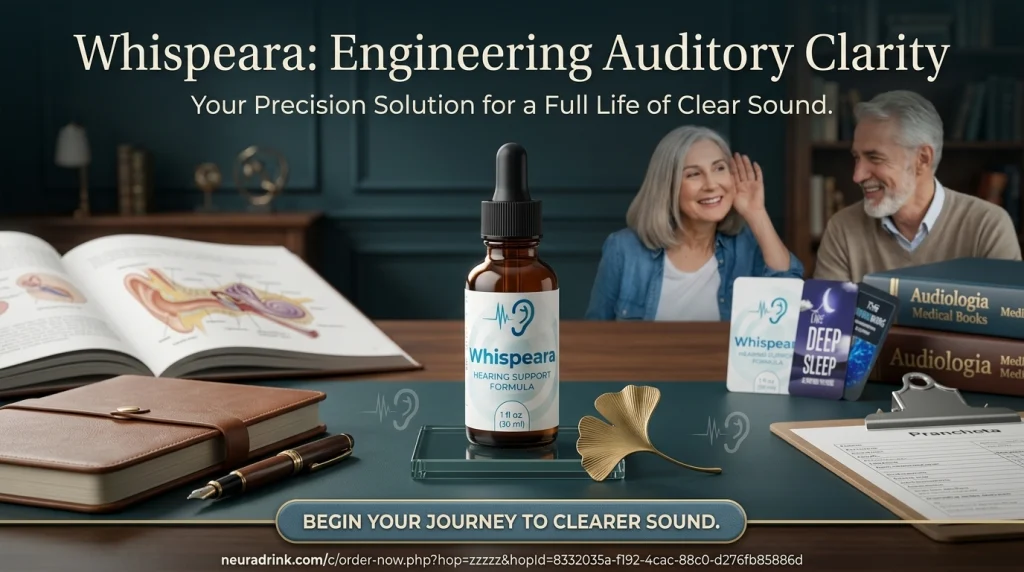
Whispeara is marketed as a hearing-support supplement for adults interested in maintaining auditory wellness and supporting communication between the auditory system and the brain.
Public promotional pages describe the product as a natural formula and advertise manufacturing in the United States, GMP-related standards, and an FDA-registered manufacturing facility. However, these claims should be distinguished from FDA approval of the finished supplement. Dietary supplements are not FDA-approved in the same way prescription medications are.
More importantly, the publicly available pages I found do not provide a consistently verifiable Supplement Facts panel with standardized ingredient quantities.
Some pages associate Whispeara with ingredients such as Alpha-GPC, GABA, L-arginine, L-tyrosine, Mucuna pruriens, and shilajit. Other promotional pages instead list ingredients such as ginkgo biloba, bilberry, green tea, maca, grape seed, and GABA.
That inconsistency is one of the most important findings in this review.

How Whispeara Compares With Alternatives
Whispeara competes in a crowded market of supplements promoted for tinnitus, hearing wellness, and auditory support.
Products such as Cortexi and Zeneara are marketed around similar consumer concerns, although their formulations, pricing structures, and evidence claims can differ.
For someone comparing products, the most important distinction should not be which website makes the strongest promise. It should be whether the company provides a transparent ingredient label, clinically relevant dosages, and clear safety information.
How Does Whispeara Work?
The proposed concept behind Whispeara is that hearing perception involves more than the physical structures of the ear.
The auditory system depends on communication between the inner ear, auditory nerve, and brain. Blood circulation, neurotransmitter activity, cellular metabolism, and neurological processing can all play roles in how sound is perceived.
Several ingredients publicly associated with Whispeara have biological functions that could theoretically relate to these processes.
For example, L-arginine is a precursor for nitric oxide, a molecule involved in vascular regulation and blood flow.
Alpha-GPC provides choline and is involved in cholinergic signaling. Human research has investigated its potential effects on cognitive performance, although the evidence is not sufficient to conclude that it improves hearing or tinnitus specifically.
The important distinction is between biological plausibility and clinical proof.
An ingredient can affect a biological pathway without demonstrating that a particular supplement will reduce tinnitus, restore hearing, or reverse age-related hearing loss.
I found no convincing evidence that Whispeara itself has been tested in a high-quality randomized clinical trial demonstrating that it treats tinnitus or hearing loss.
Ingredient Analysis: What the Research Shows
Because the publicly available Whispeara information is inconsistent, the following analysis applies to ingredients publicly associated with the product rather than claiming that every ingredient below is definitely present in the current commercial formula.
Another major limitation is dosage. Without a consistently verifiable Supplement Facts label, it is impossible to determine whether the quantities used in Whispeara match doses studied in clinical research.
Alpha-GPC
Alpha-GPC, or alpha-glycerylphosphorylcholine, is a choline-containing compound involved in acetylcholine production and cholinergic signaling.
Human research has investigated Alpha-GPC for cognitive and neurological applications. A recent randomized, double-blind, placebo-controlled crossover study evaluated 315 mg and 630 mg doses in healthy men and found some acute cognitive-performance effects, although the researchers noted that cognition remains an area requiring further investigation.
Earlier clinical research has also examined Alpha-GPC in people with cognitive impairment, but those findings cannot automatically be transferred to healthy consumers or hearing disorders.
Evidence assessment: Promising for certain cognitive applications, but insufficient evidence to establish Whispeara or Alpha-GPC as a treatment for tinnitus or hearing loss.
Dosage assessment: Cannot be determined for Whispeara because a reliable current dosage was not independently verified.
GABA
GABA, or gamma-aminobutyric acid, is an inhibitory neurotransmitter involved in nervous-system signaling.
A systematic review published in Frontiers in Neuroscience examined 14 placebo-controlled human trials of oral GABA and found limited evidence for stress-related effects and very limited evidence for sleep benefits.
That is useful context because tinnitus can be associated with stress and sleep difficulties. However, evidence that oral GABA affects stress or sleep is not equivalent to evidence that it reduces tinnitus or improves hearing.
Evidence assessment: Limited for stress-related outcomes; insufficient for hearing improvement.
Dosage assessment: The amount reportedly contained in Whispeara could not be independently verified.
L-Arginine
L-arginine is an amino acid used by the body to produce nitric oxide.
Nitric oxide participates in vascular regulation and vasodilation, which explains why L-arginine is sometimes included in products marketed around circulation. Research supports a biological role for L-arginine in nitric oxide production and vascular physiology.
The problem is the leap from circulation to hearing improvement. Even if an ingredient influences blood-flow pathways, that does not establish that supplementation will reverse hearing loss or eliminate tinnitus.
Evidence assessment: Strong biological rationale for nitric oxide physiology, but limited evidence for the specific hearing claims associated with Whispeara.
Dosage assessment: Not independently verifiable for the product.
L-Tyrosine
L-tyrosine is an amino acid that serves as a precursor for catecholamine neurotransmitters including dopamine and norepinephrine.
A systematic review of 15 studies found that tyrosine supplementation may help counteract some cognitive-performance declines under demanding conditions, such as extreme environmental or cognitive stress. However, effects were not universal.
This provides an interesting neurological rationale but does not establish L-tyrosine as a treatment for tinnitus or hearing loss.
Evidence assessment: Some evidence for cognition under specific stress conditions; insufficient evidence for hearing restoration.
Mucuna Pruriens
Mucuna pruriens is particularly important from a safety perspective because it naturally contains L-DOPA, a precursor to dopamine.
Clinical research has investigated Mucuna pruriens primarily in Parkinson’s disease. A recent systematic review identified only five clinical trials involving 108 participants and concluded that although the ingredient shows promise, the clinical evidence remains limited and further high-quality studies are needed.
There is another issue that consumers should not overlook. Laboratory analysis of commercially available Mucuna products has found substantial variation in their L-DOPA content, with some products deviating significantly from their labeled amounts.
More recent research has also highlighted concerns surrounding high-L-DOPA supplements, including unclear labeling and potentially inconsistent dosages.
Evidence assessment: Scientifically interesting but not established for hearing support.
Safety assessment: More caution is appropriate because L-DOPA can have pharmacological effects and may interact with medications or medical conditions.
Shilajit
Shilajit, sometimes called mumijo or moomiyo, is a mineral-rich substance used traditionally in various wellness practices.
Human research is still relatively limited. A 2026 pilot study evaluated 500 mg/day of shilajit resin for 28 days in healthy adult men and reported favorable changes in several physical-performance measures without serious adverse events during the study. However, this was a small, open-label study and did not investigate hearing or tinnitus.
Therefore, the available research does not establish that shilajit improves hearing.
Evidence assessment: Early and limited for general wellness outcomes; insufficient for hearing-related claims.
Keep reading; this might change your decision: NeuroVera Review 2026: Ingredients, Research and Real User Feedback Analyzed
What Real Users Are Saying
User feedback requires particular caution in this category.
Public Whispeara promotional pages contain testimonials describing improvements in hearing clarity, ringing, relaxation, and mental clarity.
However, these testimonials appear on promotional or product-associated websites. I did not find enough independently verifiable review data from major neutral platforms to establish a reliable percentage of users who experience benefit or side effects.
That means these testimonials can be considered anecdotal feedback, not clinical evidence.
The positive themes appearing across promotional pages include:
- Perceived improvement in hearing clarity
- Reduced awareness of ringing or buzzing
- Greater mental clarity
- Relaxation and improved well-being
- Convenience of incorporating the product into a daily routine
At the same time, an important negative pattern is the lack of consistently verifiable information about the exact formula and dosage.
For me, that transparency issue is more meaningful than a collection of five-star testimonials.
Keep reading to find out more: Dietary Supplements and Cognitive Function, Dementia, and Alzheimer’s Disease
Key Benefits Based on Evidence and User Feedback
Based on the available information, the potential benefits should be separated carefully from marketing claims.
- Auditory wellness: Whispeara is positioned specifically around hearing support, but there is not enough product-specific clinical evidence to conclude that it improves hearing loss.
- Cognitive support: Ingredients such as Alpha-GPC and L-tyrosine have been investigated in cognitive research, but the findings cannot be interpreted as proof that Whispeara improves memory or mental performance.
- Stress and relaxation: GABA has been studied for stress and sleep, but systematic-review evidence remains limited.
- Circulation-related support: L-arginine participates in nitric oxide production and vascular physiology, but this does not prove a meaningful effect on hearing.
- User-reported hearing changes: Some promotional testimonials describe better clarity and reduced ringing, but these reports should not be treated as controlled clinical evidence.
Pros and Cons
| Pros | Cons |
|---|---|
| Marketed specifically for hearing and auditory wellness | No clearly verified product-specific clinical trial establishing effectiveness |
| Several associated ingredients have been studied scientifically | Public websites provide inconsistent ingredient lists |
| Convenient supplement format | Individual ingredient dosages are difficult to independently verify |
| Some users report positive experiences | Promotional testimonials are not a substitute for independent clinical evidence |
| Multi-bottle packages reduce the advertised cost per bottle | Buying several bottles increases upfront financial exposure |
| Money-back protection is advertised | Guarantee terms should be checked carefully at checkout |
Who Is Whispeara Best Suited For?
Adults Interested in General Hearing Wellness
Whispeara may appeal to adults who are interested in nutritional support for hearing and understand that a supplement is not a replacement for medical assessment.
People Looking for a Non-Prescription Option
Someone interested in trying a dietary supplement rather than immediately using a medication may consider Whispeara, provided they understand the limitations of the evidence.
Consumers Comfortable With Uncertain Evidence
This product may be more appropriate for people who recognize that the evidence is ingredient-based rather than strong product-specific clinical evidence.
People Comparing Hearing-Support Supplements
Whispeara can also be considered as one option in a broader comparison, particularly if the buyer prioritizes hearing-related positioning and a money-back policy.
Who Should Avoid Whispeara?
Anyone with persistent or worsening hearing problems should not use a supplement as a substitute for professional evaluation.
Particular caution is warranted for:
- Pregnant or nursing women
- Children and teenagers
- People taking prescription medications
- People with neurological or cardiovascular conditions
- People with unexplained or sudden hearing loss
- People experiencing severe, new, or one-sided tinnitus
- People who have been advised to avoid specific herbal or amino-acid supplements
The presence of ingredients such as Mucuna pruriens is especially relevant because it contains L-DOPA, which has pharmacological effects and can create safety considerations.
Sudden hearing loss, significant dizziness, ear pain, discharge, or new one-sided tinnitus deserves medical attention rather than a supplement trial.
When in doubt, speak with your doctor or pharmacist before adding any supplement to your routine.
Realistic Expectations and Timeline
This is where consumers should be particularly careful with Whispeara marketing.
Some promotional pages suggest that users may notice changes within several weeks and that benefits build with continued use.
However, those timelines are not the same as timelines demonstrated in clinical trials of Whispeara itself.
Because I could not identify a robust randomized clinical trial testing the finished product, there is no scientifically established timeline for when Whispeara should improve hearing or tinnitus.
If someone chooses to try a supplement, it is more reasonable to monitor specific outcomes objectively rather than assuming that any change is caused by the product.
Individual results can vary according to the underlying cause of hearing symptoms, age, medications, lifestyle, sleep, existing health conditions, and other factors.
How to Use Whispeara
Public Whispeara materials describe the product as a liquid or oral spray. One publicly available product document describes a 30 ml spray bottle and a regimen of two sprays in the morning and four sprays before bedtime.
However, because the official product information supplied for verification in the original source material does not clearly correspond to Whispeara, I would not treat this dosage as independently confirmed.
The safest approach is to follow the current instructions printed on the product packaging you actually receive.
Do not increase the dosage because you believe a higher amount will produce faster results.
Also, do not combine multiple supplements containing overlapping ingredients without checking the total intake with a healthcare professional.
Is Whispeara Safe?
There is not enough product-specific clinical evidence to describe Whispeara as universally safe.
The safety question depends heavily on the actual formula, ingredient concentrations, manufacturing controls, and the consumer’s medical circumstances.
This is particularly important because the public Whispeara pages I found do not consistently agree about the ingredient list.
The presence of Mucuna pruriens would deserve particular attention because of its L-DOPA content and potential pharmacological effects. Research has documented variability in the L-DOPA content of commercial Mucuna products, which makes transparent labeling important.
Likewise, GABA, L-arginine, L-tyrosine, Alpha-GPC, and shilajit should not automatically be considered risk-free simply because they are marketed as natural ingredients.
“Natural” does not mean “appropriate for everyone.”
Anyone taking medication or managing a chronic condition should discuss the formula with a physician or pharmacist before use.

Pricing, Packages and Where to Buy
Public Whispeara promotional pages currently advertise several pricing levels, although prices can change and different Whispeara pages do not always show identical offers. One current promotional page lists the following packages:
| Package | Advertised Price | Approx. Price Per Bottle |
|---|---|---|
| 1 bottle | $69 | $69 |
| 3 bottles | $177 | $59 |
| 6 bottles | $294 | $49 |
Some pages advertise free shipping on multi-bottle packages and a money-back guarantee, while other pages show different guarantee periods.
Because of these discrepancies, buyers should verify the exact price, shipping cost, refund period, and purchase terms on the checkout page immediately before ordering.
I would also avoid assuming that every website using the Whispeara name is an authorized seller. The existence of multiple domains with different product information makes source verification especially important.
If you decide to purchase, use the current official sales channel associated with the product and save your order confirmation and refund-policy information.
Final Verdict
After reviewing the available research, I would place Whispeara in the “potentially interesting but insufficiently verified” category rather than describing it as a proven hearing solution.
The concept behind some of the publicly listed ingredients is biologically plausible. Alpha-GPC has been investigated for cognitive effects, L-arginine has a well-established role in nitric oxide physiology, GABA has been studied for stress and sleep, and Mucuna pruriens contains L-DOPA with genuine pharmacological activity.
But there is a major gap between those facts and proving that Whispeara itself improves hearing or reduces tinnitus.
The biggest concern I found is transparency. Different public pages associate Whispeara with different ingredient combinations, and the supplied verification URL does not clearly establish the product’s current manufacturer, complete label, dosages, or certifications.
That does not automatically mean the product is ineffective or fraudulent. It does mean consumers should be cautious about treating marketing claims as established science.
For someone with persistent tinnitus, hearing loss, or sudden changes in hearing, professional evaluation should come before relying on a supplement.
If you are still considering Whispeara, the most sensible approach is to verify the current label, ingredient amounts, refund terms, and seller before making a purchase.
Keep reading—it’s worth it: Daily multivitamin may enhance memory in older adults
Frequently Asked Questions about Whispeara
Does Whispeara have evidence that it improves hearing or tinnitus?
There is currently not enough high-quality clinical evidence on the finished Whispeara product to establish that it improves hearing or treats tinnitus. Some individual ingredients associated with the product have been studied, but ingredient research should not be confused with product-specific clinical proof.
Is Whispeara safe to use?
The answer depends on the actual formula, dosage, and individual health circumstances. Particular caution is appropriate because some public Whispeara pages list Mucuna pruriens, which naturally contains L-DOPA and can have pharmacological effects.
Where should I buy Whispeara?
If you choose to purchase Whispeara, verify that you are using the seller currently designated by the manufacturer or authorized sales channel. Because multiple websites publish different Whispeara information, consumers should avoid assuming that every website using the product name is legitimate.
What is Whispeara’s return policy?
Public promotional pages currently advertise a money-back guarantee, but the exact duration varies between pages, with both 60-day and 90-day claims appearing online. Check the current terms at checkout and keep your order confirmation.
How does Whispeara compare with other hearing supplements?
Whispeara is positioned similarly to other supplements marketed for hearing and tinnitus support, including products such as Cortexi and Zeneara. The most important comparison point is not the strength of the marketing but label transparency, ingredient dosages, independent evidence, safety information, price, and refund terms.
Author Bio
Zenaide Reviews is an independent product researcher and health supplement analyst who examines wellness products from a consumer-focused perspective. Her methodology involves reading clinical studies, comparing ingredient labels with published research, and tracking user feedback across available platforms. She focuses on separating evidence-based information from marketing language so readers can make informed decisions. All content published here is based on independent research and analysis. It is not intended as medical advice.