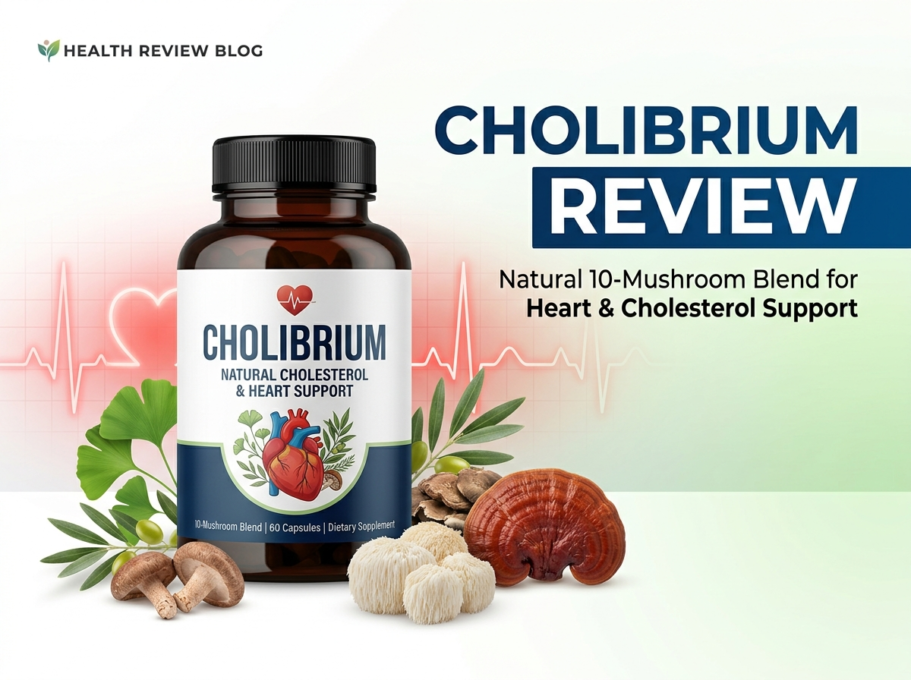
Cholibrium Reviews 2026: Does the Mushroom Formula Really Support Healthy Cholesterol?
An LDL cholesterol result above the recommended range leads many people to search for Cholibrium reviews and other dietary supplements. In this review, I look at the research behind the formula rather than the marketing claims.
I approached Cholibrium user reviews from a research perspective rather than assuming that the product’s marketing claims are proof of effectiveness. I reviewed the official product information to verify the formula, dosage, pricing and guarantee, then compared its mushroom-based ingredients with independent human research.
I am not a doctor or nutritionist. What I do is spend the time most people do not have going through published research, checking ingredient evidence and looking for independent user feedback rather than relying on testimonials supplied by a seller.
My main question going into this review was simple: does the research on mushrooms support the specific cholesterol claims associated with Cholibrium, or is the evidence considerably weaker than the marketing suggests?
Here is what I found.
What Is Cholibrium?
Cholibrium is a dietary supplement positioned around cardiovascular and cholesterol support. The official product page identifies Simple Promise as the brand and describes the formula as a combination of 10 mushroom extracts.
The mushrooms listed by the manufacturer are:
- Reishi
- Lion’s Mane
- Cordyceps
- Shiitake
- Maitake
- Turkey Tail
- Chaga
- Royal Agaricus
- White Button Mushroom
- Black Fungus
The official page states that Cholibrium is intended to support healthy heart function and help maintain cholesterol levels already within a healthy range. It also states that the product is manufactured in a cGMP-certified facility and is non-GMO.
Importantly, those manufacturing statements should not be confused with FDA approval of Cholibrium. The sales page itself states that its product claims have not been evaluated by the FDA and that the product is not intended to diagnose, treat, cure or prevent disease.
Who Is Cholibrium Designed For?
Based on the manufacturer’s positioning, Cholibrium is aimed at adults interested in nutritional support for cardiovascular wellness and maintaining healthy cholesterol levels.
That is different from saying that it is a treatment for high cholesterol. I found no published randomized clinical trial demonstrating that the finished Cholibrium formula treats hypercholesterolemia.
How Does Cholibrium Differ From Other Cholesterol Supplements?
The most obvious difference is its mushroom-based formulation.
For comparison, some competing cholesterol supplements use ingredients with substantially more direct human clinical evidence for LDL reduction, particularly plant sterols and stanols. For example, Nature Made’s CholestOff Plus provides 1,800 mg of plant sterols and stanols per day when used as directed.
Red yeast rice is another category frequently discussed in cholesterol supplementation, although it has a very different safety and regulatory profile from a mushroom formula.
The key distinction is therefore not simply the number of ingredients. It is the amount and quality of human evidence supporting the specific formulation.
Explore More Related Articles:Explore More Related Articles: Liv Pure vs HepatoBurn: The Ultimate Comparison
How Does Cholibrium Work?
The proposed mechanism is based largely on compounds naturally found in mushrooms, including beta-glucans, polysaccharides and other bioactive compounds.
However, there is an important evidence gap.
A 2023 systematic review examining mushroom consumption and cardiometabolic health found limited experimental evidence for improvements in some markers, particularly triglycerides and high-sensitivity C-reactive protein, but did not find consistent evidence for improvements in LDL cholesterol or other lipid measures. The authors also noted methodological limitations in much of the available research.
That matters when evaluating Cholibrium.
Research on mushrooms in general cannot automatically establish that a particular concentrated mushroom supplement will produce the same effects. The dose, extraction method, standardization and combination of ingredients can all change the biological effect.
So, while there is a plausible nutritional basis for studying mushrooms and cardiovascular health, the mechanism should not be interpreted as proof that Cholibrium lowers LDL cholesterol.
Ingredient Analysis: What the Research Shows
This is where the Cholibrium formula deserves the most careful examination.
The official page identifies the mushroom species but does not provide individual quantities for each mushroom in the formula.
That prevents an important comparison: we cannot determine whether the amount of a particular mushroom in Cholibrium matches the amount used in a human clinical study.
Reishi Mushroom
Reishi, or Ganoderma lucidum, contains polysaccharides, triterpenes and other compounds that have attracted considerable scientific interest.
Research has investigated reishi for several biological effects, including lipid metabolism. However, much of the cholesterol evidence is based on laboratory or animal research rather than large, high-quality human trials.
A 2025 systematic review and meta-analysis examined clinical trials involving Ganoderma lucidum at doses ranging from 200 to 11,200 mg per day, but the research covered multiple health outcomes rather than establishing that reishi is an effective treatment for high LDL cholesterol.
Evidence assessment: Limited for cholesterol-specific supplementation.
Shiitake Mushroom
Shiitake is one of the more interesting ingredients in the formula because it contains compounds such as eritadenine and beta-glucans.
There is some direct human research. One randomized, double-blind clinical trial involving 68 people with borderline high cholesterol examined shiitake mushroom bars over 66 days.
Another randomized controlled trial investigated a beta-glucan-enriched extract derived from shiitake in adults with mild untreated hypercholesterolemia. The intervention provided 3.5 grams of fungal beta-glucans per day.
The important limitation is that these studies used specific shiitake preparations and doses. Because Cholibrium does not disclose the amount of each mushroom, it is impossible to establish dose equivalence.
Evidence assessment: Promising but insufficient to validate Cholibrium itself.
Lion’s Mane
Lion’s Mane, or Hericium erinaceus, is primarily studied for neurological and cognitive effects rather than cholesterol management.
It contains bioactive compounds that have generated interest in laboratory and early human research, but evidence that Lion’s Mane meaningfully lowers LDL cholesterol in humans remains limited.
Therefore, I would not treat Lion’s Mane as a clinically established cholesterol-lowering ingredient simply because it appears in a cardiovascular supplement.
Evidence assessment: Limited for cholesterol.
Cordyceps
Cordyceps has been studied for exercise performance, metabolism, inflammation and other biological effects.
There is scientific interest in its bioactive compounds, but evidence specifically demonstrating clinically meaningful LDL reduction in humans is not strong enough to characterize Cordyceps as a proven cholesterol-lowering ingredient.
Evidence assessment: Limited for the specific purpose of lowering LDL.
Maitake and Other Mushrooms
Maitake, Turkey Tail, Chaga, Royal Agaricus, White Button Mushroom and Black Fungus contribute additional polysaccharides and other bioactive compounds.
The broader mushroom literature is interesting, but it does not provide a strong basis for assuming that combining several mushrooms automatically produces a stronger cholesterol effect.
A systematic review of mushroom consumption and cardiovascular health found potentially favorable associations in some studies, but the evidence was inconsistent for cardiovascular outcomes and lipid markers.
Evidence assessment: Insufficient for making specific cholesterol-lowering claims about the finished product.
Ingredient Evidence at a Glance
| Ingredient | Main research interest | Cholesterol evidence | Dose comparison possible? |
|---|---|---|---|
| Reishi | Antioxidant and metabolic effects | Limited | No individual dose disclosed |
| Shiitake | Beta-glucans and lipid metabolism | Promising but limited | No |
| Lion’s Mane | Cognitive and neurological research | Limited | No |
| Cordyceps | Metabolic and exercise research | Limited | No |
| Maitake | Metabolic and immune research | Limited | No |
| Other mushrooms | Antioxidant and nutritional compounds | Insufficient for Cholibrium-specific conclusions | No |
The biggest limitation across the entire ingredient analysis is the same: the amounts of individual mushrooms are not disclosed on the information I could verify. Without those quantities, it is not possible to determine whether Cholibrium delivers research-equivalent doses.
What Real Users Are Saying About Cholibrium
This is one section where caution is especially important.
I found independent discussion about Simple Promise on Trustpilot, including complaints concerning ordering and fulfillment. However, the available Trustpilot results do not provide a sufficiently large, product-specific and independently verified body of Cholibrium reviews to calculate a meaningful satisfaction rate.
I also found promotional websites presenting large numbers of Cholibrium reviews or customer ratings, but those claims are hosted on sales or affiliate-oriented websites rather than independent review databases.
For that reason, I would not present a number such as “2,000+ verified Cholibrium reviews” as established fact.
The responsible conclusion is that independent user-review evidence is currently too limited to determine how consistently Cholibrium works for real-world customers.
What This Means for Potential Buyers
Be particularly cautious with reviews claiming:
- dramatic LDL reductions
- guaranteed cholesterol improvements
- replacement of prescription medication
- rapid cardiovascular changes
- results that supposedly occur in every user
Individual testimonials cannot establish that a supplement caused a change in cholesterol, particularly without before-and-after laboratory results and appropriate controls.
Key Benefits Based on Evidence and User Feedback
The evidence supports a more modest interpretation of what Cholibrium may offer.
- Mushroom-based nutritional support: Mushrooms contain bioactive compounds such as beta-glucans and polysaccharides, although their cardiovascular effects in humans remain incompletely established.
- Potential lipid-related effects: Some mushroom research, particularly involving shiitake, provides a scientific reason for further investigation, but the evidence does not establish Cholibrium as an LDL-lowering treatment.
- Antioxidant-related research: Several mushrooms in the formula contain compounds studied for antioxidant activity, although antioxidant activity does not automatically translate into reduced cardiovascular events.
- Convenience: The manufacturer recommends two capsules daily, making the formula relatively simple to incorporate into a routine.
Pros and Cons
| Pros | Cons |
|---|---|
| Contains 10 mushroom species | Individual ingredient quantities are not disclosed |
| Manufactured in a facility described as cGMP-certified | No published clinical trial on the finished Cholibrium formula was identified |
| Official dosage instructions are clearly provided | Human evidence for mushroom-based LDL reduction remains limited |
| 365-day money-back guarantee is stated on the official page | Independent product-specific user-review evidence is limited |
| Non-GMO claim is stated by the manufacturer | It should not be considered a substitute for clinically indicated cholesterol treatment |
| Mushroom ingredients have genuine scientific research behind them | Research doses cannot be compared with Cholibrium’s undisclosed individual doses |
Who Is Cholibrium Best Suited For?
Adults Interested in Mushroom-Based Wellness
Someone who is already following a heart-conscious lifestyle and is interested in a mushroom-based supplement may find the formula relevant.
That is a nutritional choice, not a recommendation to use Cholibrium as medical treatment.
People Interested in Maintaining Healthy Cholesterol Levels
The manufacturer’s positioning is specifically around maintaining cholesterol already within a healthy range.
That distinction matters because the evidence does not establish Cholibrium as an effective treatment for diagnosed hypercholesterolemia.
People Who Prefer Multi-Ingredient Formulas
Cholibrium combines 10 mushroom species in one product.
This may appeal to people who prefer a broad formula rather than purchasing several individual mushroom supplements.
Consumers Willing to Evaluate Results Objectively
A particularly important group is people who are willing to judge the product using objective measures rather than testimonials.
If cholesterol is the goal, a lipid panel provides substantially more useful information than simply judging how someone feels.
Who Should Avoid Cholibrium?
People should be particularly cautious about starting Cholibrium without professional guidance if they:
- Are pregnant or breastfeeding
- Are under 18
- Take prescription or over-the-counter medications
- Have a diagnosed cardiovascular, liver, kidney or metabolic condition
- Have known mushroom allergies
- Are already receiving treatment for high cholesterol
- Have previously experienced adverse reactions to supplements
The official product page itself advises consultation with a healthcare provider for people who are pregnant, nursing, have a medical condition, take medications or have allergies.
Most importantly, someone prescribed cholesterol medication should not stop or replace that treatment with Cholibrium without discussing the decision with their clinician.
When in doubt, speak with your doctor or pharmacist before adding any supplement to your routine.
Realistic Expectations and Timeline
The official product page says some people may notice changes within the first few weeks and recommends consistent use for at least 90 days.
That statement should be treated as the manufacturer’s guidance rather than independent clinical evidence.
The available mushroom research does not establish a reliable Cholibrium-specific timeline for lowering LDL cholesterol. Some clinical studies of individual mushroom preparations lasted several weeks to a few months, but those findings cannot be directly transferred to this multi-mushroom formula.
If cholesterol is the reason for taking the supplement, the most meaningful way to assess a change is through appropriate laboratory testing interpreted by a healthcare professional.
Diet, physical activity, genetics, existing medications and baseline cholesterol can all affect the result.
How to Use Cholibrium
According to the official product instructions, adults should take:
Two capsules daily, preferably 20 to 30 minutes before a meal, with an 8-ounce glass of water, or as recommended by a healthcare provider.
The official page states that each bottle contains 60 capsules, described as a 30-day supply.
Common Mistakes to Avoid
- Do not exceed the stated serving size.
- Do not use the supplement as a substitute for prescribed medication.
- Do not assume more capsules will produce better results.
- Do not judge cholesterol changes solely by symptoms.
- Do not combine multiple cholesterol supplements without discussing the combination with a healthcare professional.
Is Cholibrium Safe?
The manufacturer states that Cholibrium is produced in a cGMP-certified facility and describes the formula as non-GMO, gluten-free and allergen-free. These are manufacturer-provided claims rather than independent evidence that the finished product is appropriate for every individual.
The safety picture is also complicated by the fact that the formula contains multiple mushroom extracts.
Although culinary mushrooms are widely consumed as foods, concentrated extracts can differ from ordinary dietary exposure. Individual ingredients may also interact differently with medications or medical conditions.
The product page specifically recommends professional consultation for people taking medications or dealing with medical conditions.
There is another important point: cGMP certification does not mean FDA approval or proof of clinical effectiveness. The official page itself states that the product’s claims have not been evaluated by the FDA.
For anyone taking statins, blood-pressure medication, anticoagulants or other prescription medicines, checking with a pharmacist or physician before use is particularly sensible.
Pricing, Packages and Where to Buy
At the time this review was researched, the official sales page listed the following prices:
| Package | Price per bottle | Total |
|---|---|---|
| 1 bottle | $59 | $59 |
| 3 bottles | $49 | $147 |
| 6 bottles | $39 | $234 |
The official page states that each bottle contains a 30-day supply and advertises free U.S. shipping.
It also states that purchases are covered by a 365-day, 100% money-back guarantee, with the page saying that customers can request a refund within 365 days if they are not satisfied.
Because pricing, availability and refund terms can change, readers should verify the current terms at checkout.
Where Should You Buy Cholibrium?
If you decide to purchase Cholibrium, use the official sales channel rather than an unfamiliar marketplace listing.
This reduces the risk of receiving an expired, altered or counterfeit product and gives you a clearer path to the advertised money-back guarantee.
For the current official offer, use the manufacturer’s authorized sales page: Cholibrium official sales page
There is no need to purchase a large multi-bottle package simply because the per-bottle price is lower. The larger package only makes financial sense if you have already decided that the product is appropriate for you.
Cholibrium Compared With Alternatives
One useful way to evaluate Cholibrium is to compare the type of evidence behind its ingredients with alternatives that have been studied more directly for LDL cholesterol.
Cholibrium vs Plant Sterols
Plant sterols and stanols have considerably more direct evidence for lowering LDL cholesterol.
A meta-analysis covering 124 studies found that plant sterol and stanol intake of approximately 0.6 to 3.3 grams per day reduced LDL cholesterol by an average of 6% to 12%.
Another meta-analysis of randomized trials found that plant sterol or stanol supplements reduced LDL cholesterol by approximately 12 mg/dL compared with placebo.
This makes plant sterols a useful evidence-based comparison point when evaluating a mushroom-focused product.
Cholibrium vs Berberine
Berberine has also been investigated in randomized trials for lipid management.
A 2023 systematic review and meta-analysis involving 18 studies and 1,788 participants found reductions in LDL cholesterol, total cholesterol, triglycerides and apolipoprotein B. However, the authors also noted limitations in the evidence base.
Berberine also has potential medication interactions, so more evidence does not mean that it is automatically appropriate for every person.
Cholibrium vs Red Yeast Rice
Red yeast rice is another commonly discussed cholesterol supplement.
A 2024 systematic review and meta-analysis found that red yeast rice reduced total and LDL cholesterol in several clinical trials.
However, red yeast rice is not simply a harmless natural alternative to prescription therapy. Its active compounds can have statin-like effects, which is one reason professional guidance is important.
The comparison demonstrates why the ingredient list alone is not enough. The strength of human clinical evidence and the safety profile both matter.
Read More on This Topic: Prevention and Treatment of High Cholesterol (Hyperlipidemia)
Final Verdict
After reviewing the available research, the most defensible conclusion is that Cholibrium is an interesting mushroom-based wellness supplement, but the evidence does not currently establish the finished product as a clinically proven cholesterol-lowering treatment.
The formula contains several legitimate medicinal or culinary mushrooms that have been investigated scientifically. Shiitake, in particular, has some human research relevant to lipid metabolism.
At the same time, broader systematic reviews describe the human evidence for mushrooms and cardiometabolic health as limited or inconsistent.
The biggest limitation I found is the lack of disclosed individual ingredient amounts. Without those quantities, it is impossible to determine whether the product delivers research-equivalent doses.
There also does not appear to be a published randomized clinical trial testing the complete Cholibrium formula for LDL reduction.
For someone whose cholesterol is already within a healthy range and who simply wants to explore a mushroom-based wellness product, the formula may be worth investigating with appropriate expectations.
For someone with significantly elevated LDL cholesterol or established cardiovascular risk, the more important question is not whether Cholibrium sounds natural. It is whether the person’s overall treatment plan is supported by appropriate clinical evidence.
That distinction is important.
Frequently Asked Questions Cholibrium (FAQ)
What does the evidence say about Cholibrium effectiveness?
There is currently insufficient clinical evidence to conclude that the finished Cholibrium formula reliably lowers LDL cholesterol. Some individual mushrooms, particularly shiitake, have been studied in humans, but those results cannot automatically be applied to the complete product.
Is Cholibrium safe?
The manufacturer states that Cholibrium is produced in a cGMP-certified facility and recommends consulting a healthcare professional before use, particularly when taking medications or managing a medical condition. Because it contains multiple concentrated mushroom extracts, individual suitability can vary.
Where can I buy Cholibrium?
The product is sold through the official sales channel associated with Simple Promise and ClickBank. Buying through the authorized channel is preferable because it provides access to the stated pricing and 365-day money-back guarantee.
What is the Cholibrium return policy?
The official sales page currently states that purchases are protected by a 365-day money-back guarantee. It says customers can request a refund within 365 days if they are not satisfied, although buyers should verify the current refund instructions and terms before purchasing.
How does Cholibrium compare with alternatives?
Cholibrium differs from supplements based on plant sterols, berberine or red yeast rice because it uses a multi-mushroom formula. Those alternatives have different levels of human clinical evidence and different safety considerations, so the appropriate choice depends on the individual’s health situation rather than the ingredient list alone.
Author Bio
Zenaide Reviews is an independent product researcher and health supplement analyst who looks beyond marketing claims to understand what products can realistically offer. Her methodology combines reading clinical studies, tracking user feedback across multiple platforms, and comparing ingredient labels with published research. She focuses on clear explanations, balanced evidence and practical considerations so readers can make informed choices. All content published here is based on independent research and analysis. It is not intended as medical advice.